
How to Check a US Car History by VIN: Salvage Title, Odometer, and Copart & IAAI Auction Photos
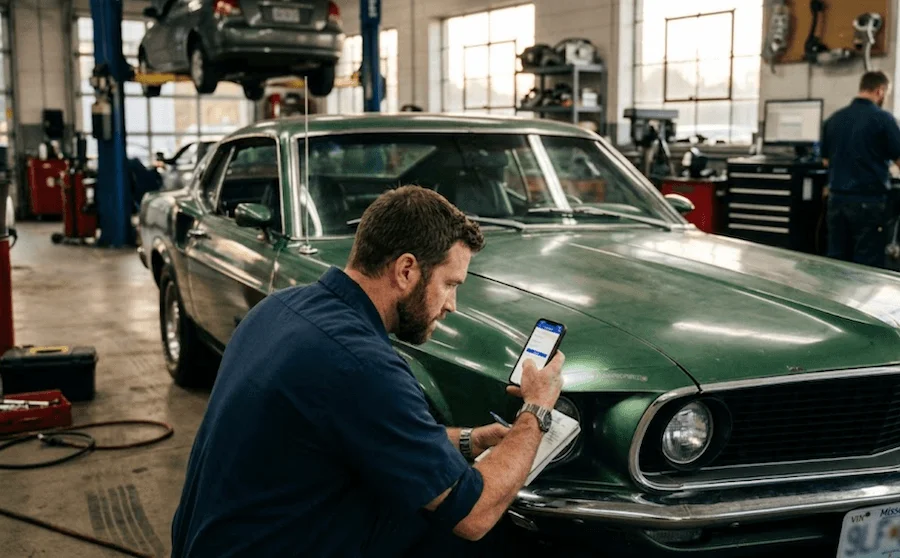
How to check a US car by VIN: NMVTIS title history, salvage/rebuilt/junk/flood brands, odometer rollback, and real pre-repair photos from the Copart and IAAI auctions.
To check a US car history by VIN, you pull the government title record (the NMVTIS system), see which brands it carries — salvage, rebuilt, junk, flood — cross-check the odometer readings, look for theft records, and, above all, view real photos of the car from the Copart and IAAI auctions, where it was shot before any repairs. The VIN is the 17-character body code, the key to a car's entire life story.
What to check on a US car by VIN
A proper check comes down to four things. Skip any one of them and you risk paying full price for a rebuilt wreck.
Title type: salvage, rebuilt, junk, flood
A title is the ownership document, and the state stamps a brand on it — a mark describing the car's condition. Salvage means the insurer declared the car a total loss: the repair cost more than the car is worth. Rebuilt means the car was fixed and allowed back on the road. Junk means it is fit only for parts. Flood means it was submerged. Once assigned, a brand stays in the NMVTIS record forever and follows the VIN as the car moves between states.
Real damage from the auction photos
You can't trust the seller's word, but you can trust the auction photos. Copart and IAAI photograph the car the moment it arrives at the yard — wrecked, before any bodywork. The images show where the impact landed, whether there was a fire, whether water sat in the cabin, and whether the airbags went off.
Mileage and the odometer
Odometer rollback in the US is a mass phenomenon. NHTSA estimates that roughly 450,000 cars are sold every year with a false odometer reading, and the total loss to buyers tops $1 billion a year. NMVTIS stores the odometer reading recorded at each title event, so it is easy to spot when the numbers suddenly run backward.
Theft records
The history also captures records of theft and recovery. A separate danger is VIN cloning, where the number from a legal car is put on a stolen one or on a rebuilt "twin."
Why you can't trust the listing or the seller's word
The main scheme is called title washing.
Re-registering between states can hide the salvage brand. The car is driven to a state with looser rules and issued a "clean" title there — the brand isn't always carried over to the new document. The federal NMVTIS database was created precisely to fight this: nearly every state, along with insurers and salvage yards, reports into it — covering roughly 87–96% of the US vehicle fleet — so once a brand is assigned it stays tied to the VIN. But a few states still don't report fully, and not every marketplace or buyer checks the database, so some "washed" cars still slip through as clean. Title washing is a form of title fraud: it's illegal under state law, and where interstate or mail/wire elements are involved it can also be prosecuted federally.
Flippers rebuild wrecks and sell them as clean. After bodywork the damage is invisible, and a car with a clean title is worth noticeably more than a former salvage — so there's every motive to pass it off as undamaged.
Flood cars are sold with no brand at all. If no flood insurance claim was filed, the flood brand may never be applied — the car is dried, cleaned, and sold as normal. The electrical gremlins and corrosion make themselves known months later.
That's why a photo of the car BEFORE the repair matters more than any words in a listing.
Why the Copart and IAAI auction photos are the most honest proof
Copart and IAAI are the largest insurance auto auctions in the US; the bulk of total-loss cars from crashes, thefts, and natural disasters ends up on them. Every car is photographed on arrival at the yard — wrecked, in its pre-restoration state. That is a permanent snapshot of the real damage.
That's the power of it: after the repair and a possible title wash the damage is hidden, but the auction photos show forever how the car looked when it was declared a total loss. Auction records by VIN usually include a photo gallery, the primary and secondary damage type, the title status, the mileage at sale, and notes on whether the car starts and whether it has keys.
One caveat: photos don't always capture every problem — hidden defects are possible — so the auction shots are best combined with a full VIN report.
Where to find the VIN on a US car
The VIN sits in several places, and they should all match:
on the dash on the driver's side, visible through the windshield — a metal plate at the base of the glass;
on a sticker in the driver's door jamb (on the body pillar);
in the paperwork — the title, the registration, the insurance policy.
The VIN must match everywhere. Different numbers, a damaged plate, or a mismatch with the documents is a red flag for VIN cloning or a swapped title.
Pre-purchase checklist for a US car
Find the VIN and cross-check it on the body and in the documents — it should match everywhere.
Pull the title history across all states: look for salvage, rebuilt, junk, and flood brands.
View the Copart and IAAI auction photos — judge the real damage before the repair.
Cross-check the odometer readings — the numbers should never drop from one record to the next.
Check for theft and total-loss records.
Be wary if the title hopped quickly from state to state.
For an expensive purchase, order an in-person inspection of the car at the auction yard.
How to check a US car history by VIN
Enter the VIN on the vinlid.com homepage. The US report is built on the government NMVTIS system and shows title records, brands (salvage, rebuilt, junk, flood, total loss), theft records, and odometer readings — plus real photos of the car from the Copart and IAAI auctions.
Before you pay, a free preview is available: it shows whether any records exist for that VIN (the details open once you unlock). The full US report costs from $3.49, or $5.99 with the Copart and IAAI auction photos, and is available in 19 languages. There's also a free VIN decoder.
If you're looking at a car from Korea, vinlid.com produces a separate report: inspection-station records, photos, verified mileage, accidents and repairs, and a condition assessment across roughly 69 items.
See what a finished report looks like —an example VIN check.
Frequently asked questions
How do I check whether a US car is wrecked using the VIN?
Run the VIN through an NMVTIS-based report — it shows the title brands (salvage, rebuilt, junk, flood) and total loss. On top of that, look at the Copart and IAAI auction photos: they reveal the real damage before the repair, even when the seller stays quiet about it.
Can I see Copart or IAAI auction photos by VIN?
Yes. Copart and IAAI photograph every car when it arrives at the yard, in wrecked condition. The VIN report on vinlid.com pulls in these real auction photos, so you see the car's true state before any bodywork.
What is a salvage title, and is it dangerous to buy such a car?
Salvage is the brand a state applies when the insurer declares the car a total loss: repairs cost more than the car is worth. You can buy one, but do it with your eyes open — such a car is worth noticeably less than a clean-title equivalent, and hidden defects after a crash or flood often surface later.
How can I tell whether a US car's odometer has been rolled back?
NMVTIS stores the odometer reading from each title event. If a later record shows fewer miles than an earlier one, that's a rollback. NHTSA estimates that around 450,000 cars a year are sold in the US with a false odometer reading, so the odometer is always worth checking.
What is title washing, and how do I catch it?
Title washing is "laundering" a title: the car is re-registered in a state with lax rules to erase the salvage brand and get a "clean" document. You catch it through the multi-state history — an NMVTIS-based report gathers records from nearly every state and reveals the original brand. A title that jumped quickly between states is itself a warning sign.
How much does it cost to check a US car by VIN on vinlid.com?
There's a free preview that shows whether any records exist for the VIN. The full US report costs from $3.49 (or $5.99 with the auction photos) and is available in 19 languages. A free VIN decoder is available too, and for cars from Korea there's a separate report with inspection data.