
Fuel-Efficient Cars in 2026: Why the Market Is Shifting and What to Buy Now
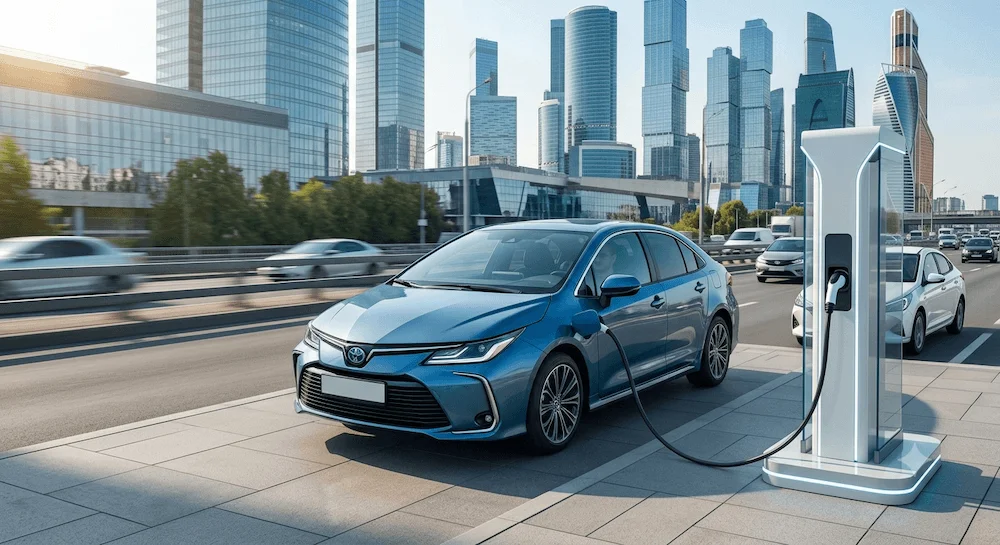
Fuel prices are rising across the CIS region, and demand is shifting toward economical and hybrid vehicles. Here's a breakdown of current used-car market trends — which models are gaining popularity, which are losing, and what it all means for used-car buyers.
What's Happening in the Auto Market in 2026
By mid-2026, the used car markets across Russia, Kyrgyzstan, Kazakhstan, and other CIS countries have visibly shifted. Gasoline and diesel prices have risen by 15–25% since the beginning of the year, and this has directly reshaped buyer preferences.
If in 2023–2024 the most popular vehicles were large SUVs and spacious crossovers with powerful engines, in 2026 the spotlight has moved to a very different category of cars. Buyers have started calculating not just the sticker price but the full cost of ownership over the next 3–5 years.
This creates interesting opportunities — some segments have become cheaper, others have become more expensive, and a smart buyer right now can either save money or make a solid investment.
What's Rising in Price
At the top of buyer preferences are vehicles sharing one common quality — low fuel consumption. Specifically, prices are climbing for:
Hybrids:
Toyota Prius — used models from 2018–2022 are up 18–25% since the start of the year
Hyundai Sonata Hybrid — the most in-demand hybrid sedan in the CIS region
Kia K5 Hybrid, Kia Niro — up 12–18%
Lexus ES Hybrid, Lexus NX Hybrid — premium segment up 10–15%
Compact cars:
Hyundai Accent 1.4 — demand has doubled
Kia Rio, Toyota Yaris — steady demand, prices up 8–12%
Honda Fit and Toyota Vitz — older Japanese compacts back in style
Electric vehicles:
Hyundai Ioniq 5, Kia EV6 — demand outpaces supply
Tesla Model 3 — used prices up for the first time in two years
Chinese cars — entering Bishkek and Almaty markets at scale
What's Dropping in Price
The mirror image — vehicles with high fuel consumption are losing value.
Large SUVs:
Toyota Land Cruiser 200 with V8 — prices down 8–12%
Lexus LX 570 — down 10–15%
Mercedes GLS, BMW X7 with V8 — becoming less liquid
American pickups:
Ford F-150 with 5.0 V8 — down 12–18%
Dodge Ram, Chevrolet Silverado — down 10–15%
Older imports with heavy fuel use:
Toyota Camry 2.5 and 3.5 from earlier generations
Honda Pilot, Acura MDX with V6
Older European business-class sedans
This creates an interesting opportunity for buyers willing to pay more at the pump in exchange for comfort — large vehicles are now noticeably cheaper than a year ago.
Why Hybrids Became So Popular
Hybrids are the dominant trend in the CIS market in 2026. They used to be seen as "toys for European eco-conscious buyers," but real-world fuel consumption numbers have flipped the market.
Compare a typical scenario — city driving in Bishkek or Almaty:
Toyota Camry 2.5 (gasoline): 11–13 L per 100 km
Toyota Camry Hybrid: 4.5–6 L per 100 km
Monthly difference at 1,500 km of driving: about $65–75 in fuel savings
Over a year that's $800–900 in savings. Over three years it's $2,500–2,700 — comparable to the cost of the hybrid system itself.
There's a second factor — hybrids hold their value better at resale. A regular sedan typically loses 25–30% of its value in three years; a hybrid loses only 12–18%. So you save twice: on fuel now and on residual value later.
Should You Buy an Electric Car
EVs are still a niche segment in the CIS region, but the picture is changing. Here are the facts for anyone considering this option.
Pros:
Electricity consumption equivalent to 1.5–2 L of gasoline per 100 km — five times cheaper to run
Home charging costs roughly $0.30–0.50 per 100 km
Minimal maintenance: no oil changes, no traditional transmission, no spark plugs
In major cities the charging network is growing rapidly
Cons:
Real-world range on most used EVs is 250–350 km
Winter range drops by 25–35%
Used EVs from Korea and the US often arrive with degraded batteries — battery capacity must be verified
Long-distance trips require charging planning
Service centers and parts are still limited — not every shop is ready to work on EVs
Who it works for: If your daily driving is 50–80 km, you can charge at home or work, and you plan to own the car for 4+ years — an EV is economically excellent.
Who it doesn't work for: Frequent intercity driving, no charging access at home, or planning to resell in 1–2 years — go with a hybrid instead.
Is Diesel Still Worth Considering
Diesel cars in the CIS have traditionally been the choice for people who drive a lot. In 2026 the picture is mixed — diesel prices are rising even faster than gasoline, but diesel consumption is still 25–35% lower.
When diesel makes sense:
Annual mileage over 25,000 km
Most of your driving is highway
The car serves as a work tool (freight, taxi, delivery)
Quality diesel is available in your region
When diesel doesn't make sense:
City driving with short trips — clogs the particulate filter, kills the turbo early
Poor local diesel quality — destroys the fuel injection system
Less than 15,000 km per year — savings don't cover the higher maintenance costs
If you go with diesel, always check whether the car has had major fuel system repairs or particulate filter replacement. Sellers often hide this.
How to Save Fuel With Any Car
Even without a hybrid, there are ways to meaningfully reduce consumption:
Smooth driving without hard acceleration — saves 15–20% of fuel
Correct tire pressure — under-inflated tires raise consumption by 5–8%
Timely air and fuel filter replacement — clogged filters add 10% to consumption
Removing roof racks when not needed — they add 8–12% on the highway
Limiting warmup to 1–2 minutes in winter — modern engines don't benefit from long idle warmups
Using cruise control on the highway — steady speed saves 5–10%
Combined, these simple habits can cut fuel consumption by 25–30% — roughly one third of your fuel costs.
Which Cars to Import From Korea and the US
If you're planning to import, here's what makes sense right now.
Best picks from Korea:
Hyundai Sonata Hybrid 2020–2023 — optimal balance of price, fuel economy, and comfort
Kia Niro Hybrid 2019–2022 — compact crossover with 4–5 L consumption
Hyundai Ioniq Hybrid 2018–2022 — the most fuel-efficient sedan in its class
Kia K5 Hybrid 2021–2023 — modern design with strong performance
Best picks from the US:
Toyota Camry Hybrid 2018–2023 — legendary reliability plus low consumption
Honda Accord Hybrid 2018–2023 — excellent Camry alternative
Lexus ES 300h 2019–2023 — premium hybrid sedan
Toyota Prius 2017–2023 — the fuel economy icon
What to avoid right now:
Large SUVs with gasoline engines over 4.0 liters
Older American sedans with V6 engines
Cars with already-high mileage (170,000+ km) — short-term savings turn into expensive maintenance
The Most Important Step — Check the Vehicle's History
When the market gets volatile, the temptation to buy a "cheaper" car increases, and this automatically means a higher risk of getting a problem vehicle. Rolled-back odometers, hidden accident damage, faulty hybrid batteries — all of these are easy to hide but expensive to fix.
A VIN history check before buying costs a few dollars and protects against losing thousands. This matters especially for hybrids and EVs — the battery condition determines how long the car will keep working, and that information can often be inferred from inspection history records.
Bottom Line
The CIS used car market is changing rapidly, and these changes create new opportunities. Some buyers will win by grabbing a hybrid at a reasonable price before they appreciate further. Others will win by buying a large SUV at peak discount.
The key is choosing a car based not on sticker price alone but on total cost of ownership. Fuel consumption, residual value, parts availability — these three factors matter more now than ever before.
And of course — always check the vehicle history before buying. A few dollars on a report is the cheapest insurance against the most expensive mistakes.