
Hidden Accident Damage: 7 Signs Every Buyer Must Know
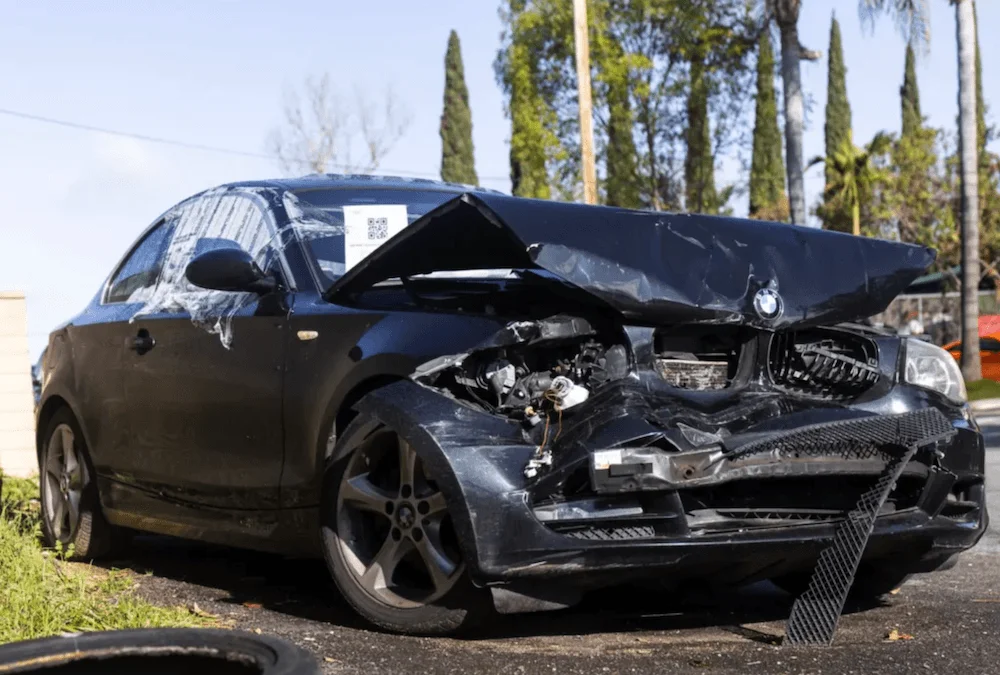
Many imported cars have been in accidents that sellers try to hide with fresh paint and quick repairs. Learn the seven telltale signs of undisclosed collision damage before you buy.
Why Hidden Damage Is a Serious Problem
A car involved in a significant accident can lose 30–50% of its market value, even after professional repairs. Dishonest sellers know this, so they hide accident history to charge a higher price.
The problem goes beyond money. Poorly repaired structural damage can compromise the safety of everyone inside the vehicle during future collisions. Airbags may not deploy correctly. Crumple zones may not absorb impact as designed.
Sign 1 — Uneven Paint Color or Texture
Original factory paint has a uniform color and texture across the entire vehicle. If you notice:
One panel looks slightly darker or lighter than others
Orange-peel texture on some panels but smooth on others
Overspray on rubber trim, window seals, or plastic parts
Paint edges or "runs" near body lines
...the car has almost certainly been repainted. Check if it matches the declared history.
Sign 2 — Mismatched Panel Gaps
Examine the gaps between doors, hood, trunk, and fenders. Factory assembly is extremely precise — gaps are uniform all around.
If one side has a wider gap than the other, or a panel sits slightly higher than its neighbors, it has likely been removed and reinstalled. This often happens after collision repairs.
Sign 3 — Overspray on Hidden Surfaces
Even skilled technicians leave traces of paint in places they can't clean easily:
Inside the engine bay, especially along fender edges
Inside door jambs and trunk seals
Under the carpet in the trunk
Around the gas tank filler
On bolts, hinges, and mounting brackets
Original bolts have factory-applied markings. If they show paint overspray, the panel they hold has been repainted.
Sign 4 — New Parts on an Old Car
Cross-check the age of components. A 10-year-old car should have 10-year-old parts. If you see:
A shiny new radiator support on a car with worn seats
New headlights on a faded paint job
A fresh windshield on an otherwise dusty interior
...something replaced those parts recently. Ask why.
Sign 5 — Weld Marks and Sealer Inconsistencies
Open the hood and look at the strut towers, frame rails, and inner fenders. Factory welds are uniform and covered with consistent seam sealer.
Repair welds often look rougher, with extra metal, grinding marks, or sealer that doesn't match the factory pattern. In the trunk, lift the carpet and inspect the floor pan for the same signs.
Sign 6 — Suspicious Service Records
Legitimate service history should be continuous. Watch for:
A gap of 1–2 years with no maintenance records
Records from specialty body shops rather than the regular dealer
A sudden change in service intervals
Records that jump from one city or country to another
Each of these could indicate time spent in a repair shop after a collision.
Sign 7 — Inconsistent VIN Records
This is where a proper VIN history report becomes essential. Check if the vehicle's:
Inspection mileage history shows a logical progression
Accident flags appear in Korean or American databases
Title status is clean in the country of origin
Export declaration matches the car's actual condition
If any of these don't align, walk away — no matter how good the price looks.
How to Protect Yourself
Before paying for any used car:
Inspect the vehicle in daylight, not at dusk or in a dim showroom
Bring a flashlight and a magnet (for detecting body filler — it won't stick to filled areas)
Request a full VIN history report from a reliable source
Pay an independent mechanic for a pre-purchase inspection
Take the car for a test drive at highway speeds
A thorough inspection costs less than $100. An accident-hidden car costs thousands. The math is simple.
The Bottom Line
Hidden accident damage is one of the most common scams in the used car market worldwide. Fresh paint and new parts can make a wrecked vehicle look like a bargain, but the risks to your wallet and safety are real.
Always verify history, always inspect carefully, and always trust documentation over seller promises.