
92, 95 or 98? Understanding Octane Ratings and Choosing the Right Gasoline
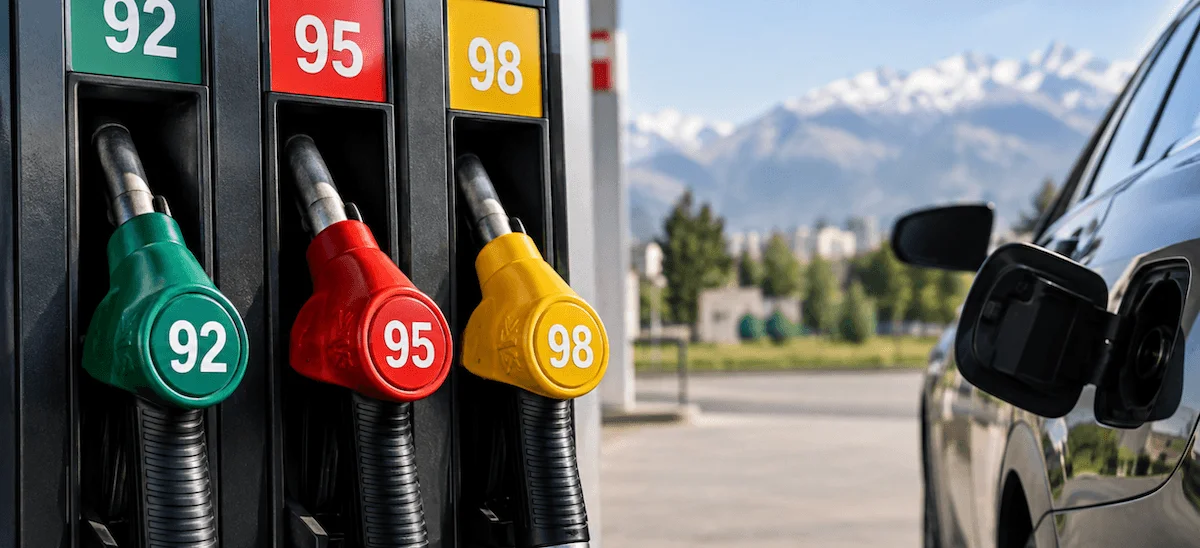
What’s the difference between 92, 95, and 98 octane gasoline? Learn what octane ratings mean, how engine knock works, whether higher octane means more power, and which fuel is right for your car.
At the gas station, we are used to choosing between 92, 95, 98 and other types of gasoline. Many people assume that the higher the number, the “better” the fuel and the more powerful the car will be.
But it is a little more complicated than that.
The octane rating does not directly indicate the overall quality of gasoline. It indicates how resistant the fuel is to knocking — an abnormal combustion process that can occur inside an engine.
Let's break it down in simple terms.
What is an octane rating?
The octane rating measures the fuel's resistance to engine knock.
For example:
92 — octane rating around 92;
95 — octane rating around 95;
98 — octane rating around 98.
The higher the octane rating, the more resistant the gasoline is to premature or uncontrolled combustion under high temperature and pressure.
There is one important thing to understand:
95-octane gasoline is not necessarily "more powerful" than 92. It simply handles higher pressure and temperature without knocking as easily.
What is engine knock?
Imagine that an engine is compressing an air-fuel mixture inside a cylinder.
Under normal conditions, the spark plug creates a spark, and the mixture burns in a controlled way. The expanding gases push the piston downward.
With knock, part of the mixture can ignite prematurely or in an uncontrolled manner.
This creates sudden pressure waves inside the cylinder. You may sometimes hear this as a characteristic metallic pinging or knocking sound.
That is bad for an engine.
Severe or prolonged knocking can increase stress on:
pistons;
valves;
spark plugs;
connecting rods;
bearings;
head gaskets.
In extreme cases, serious engine damage can occur.
Why do modern engines often need 95 or 98?
Modern gasoline engines are becoming increasingly efficient.
Manufacturers use technologies such as:
higher compression ratios;
turbocharging;
direct fuel injection;
higher boost pressure;
sophisticated ignition control.
The higher the pressure and temperature inside the cylinder, the greater the risk of knocking.
That's why some engines require fuel with a higher octane rating.
For example, an engine designed for 95-octane gasoline may still run on 92, but that does not mean it is a good idea to use it regularly.
What happens if you use 92 instead of 95?
It depends on the specific engine.
If the manufacturer allows 92, there is normally no problem.
If the engine is designed for 95 or higher, the situation is different.
Modern engine-management systems can detect signs of knock using knock sensors and adjust the ignition timing.
This means the car may continue to run even on lower-octane fuel.
However, the engine may:
produce less power;
respond less sharply to the accelerator;
consume more fuel;
adjust its ignition timing.
A single tank of lower-octane fuel does not necessarily mean the engine will immediately be damaged. However, regularly using fuel below the manufacturer's recommendation is not a good practice.
What if you use 98 instead of 95?
This is where a common myth comes in.
Higher octane does not automatically mean more power.
If an engine is designed for 95 and cannot take advantage of the higher octane rating, you may notice practically no difference after filling up with 98.
The car does not automatically become faster simply because the number on the fuel pump is higher.
However, some modern engines can adapt their settings to higher-octane fuel. In those cases, a performance benefit may be possible.
This is especially relevant for powerful turbocharged engines.
So is 98 useless?
No.
For an engine that is designed or tuned to run on high-octane fuel, 98 can be necessary.
This is particularly relevant to some:
sports cars;
high-performance turbocharged engines;
high-compression engines;
cars with engine tuning or modified software.
For example, if an engine has been tuned specifically for 98-octane fuel, switching to 92 may affect not only performance but also how safely the engine operates under load.
Does higher octane mean better-quality gasoline?
Not necessarily.
This is one of the most important things to remember.
Octane rating and overall fuel quality are not the same thing.
Gasoline quality also depends on:
fuel composition;
compliance with standards;
cleanliness;
consistency;
additive quality;
storage conditions;
the condition of the gas station's equipment.
So good-quality 95-octane gasoline from a reliable gas station may be a better choice than questionable 98-octane fuel.
Why are there 92, 95 and 98?
Different engines have different requirements.
In simple terms:
92-octane
Suitable for engines designed to run on this fuel.
95-octane
A common choice for many modern gasoline vehicles.
98-octane
Used where the engine requires or can effectively take advantage of a higher octane rating.
The main rule is simple:
Use the fuel recommended by the vehicle manufacturer.
You can usually find this information in the owner's manual, on the fuel-filler flap, or in the vehicle's technical documentation.
Can you mix 92 and 95?
In normal circumstances, gasoline with different octane ratings can be mixed.
For example, if you have some 92 left in the tank and fill it with 95, nothing catastrophic will happen.
The resulting octane rating will generally be somewhere between the two fuels, although the exact result depends on the composition and quantities of the fuels.
The same applies to mixing 95 and 98.
However, if the manufacturer specifies a minimum octane rating, you should not deliberately dilute higher-octane fuel with lower-octane gasoline.
Why can fuel consumption change after switching gasoline?
Sometimes drivers notice that their fuel consumption becomes slightly lower after switching from 92 to 95.
This can happen, but it is incorrect to say that 95-octane fuel is always more economical than 92.
Fuel consumption depends on many factors:
driving style;
outside temperature;
traffic;
tire pressure;
engine condition;
fuel quality;
air conditioning;
route;
vehicle load.
Modern engine-management systems can also adjust engine operation depending on driving conditions.
That's why fuel economy should be compared over several tanks rather than based on a single trip.
What should you choose for your car?
A simple approach:
If the manufacturer specifies 92
Use good-quality 92-octane gasoline.
Switching to 95 may not provide any meaningful benefit.
If 95 is recommended
Use 95-octane gasoline.
Regularly choosing 92 simply to save money usually isn't worthwhile, especially if the engine is designed for a higher octane rating.
If 98 is required
Follow the manufacturer's recommendation.
This is particularly important for high-performance turbocharged engines and vehicles with modified engine software.
What matters more — 92, 95, or a good gas station?
In many cases, it is much more important to buy quality fuel from a reliable gas station than simply choosing the highest number on the pump.
Think of it this way:
Correct octane rating + quality fuel = the right combination for your engine.
While:
Maximum octane + questionable fuel quality ≠ automatically better.
The bottom line
Octane rating is primarily about resistance to engine knock, not the "strength" or overall quality of gasoline.
98 is not automatically better than 95, and 95 is not necessarily better than 92 for every car.
The best fuel for a particular vehicle is the one that meets the requirements of its engine and is of good quality.
So instead of asking:
“What is the best gasoline?”
The better question is:
“What gasoline does this particular engine need?”
Knowing the answer can help you keep the engine running properly, avoid unnecessary expenses, and avoid paying extra for an octane rating your car cannot actually take advantage of.